Choose Your Own Adventure: A New Toolkit That Meets You Where You Are
Fall 2026
California Making Access Possible (CA MAP) is funded by the California Department of Social Services (CDSS) to help early care and education providers include children with disabilities in their programs.
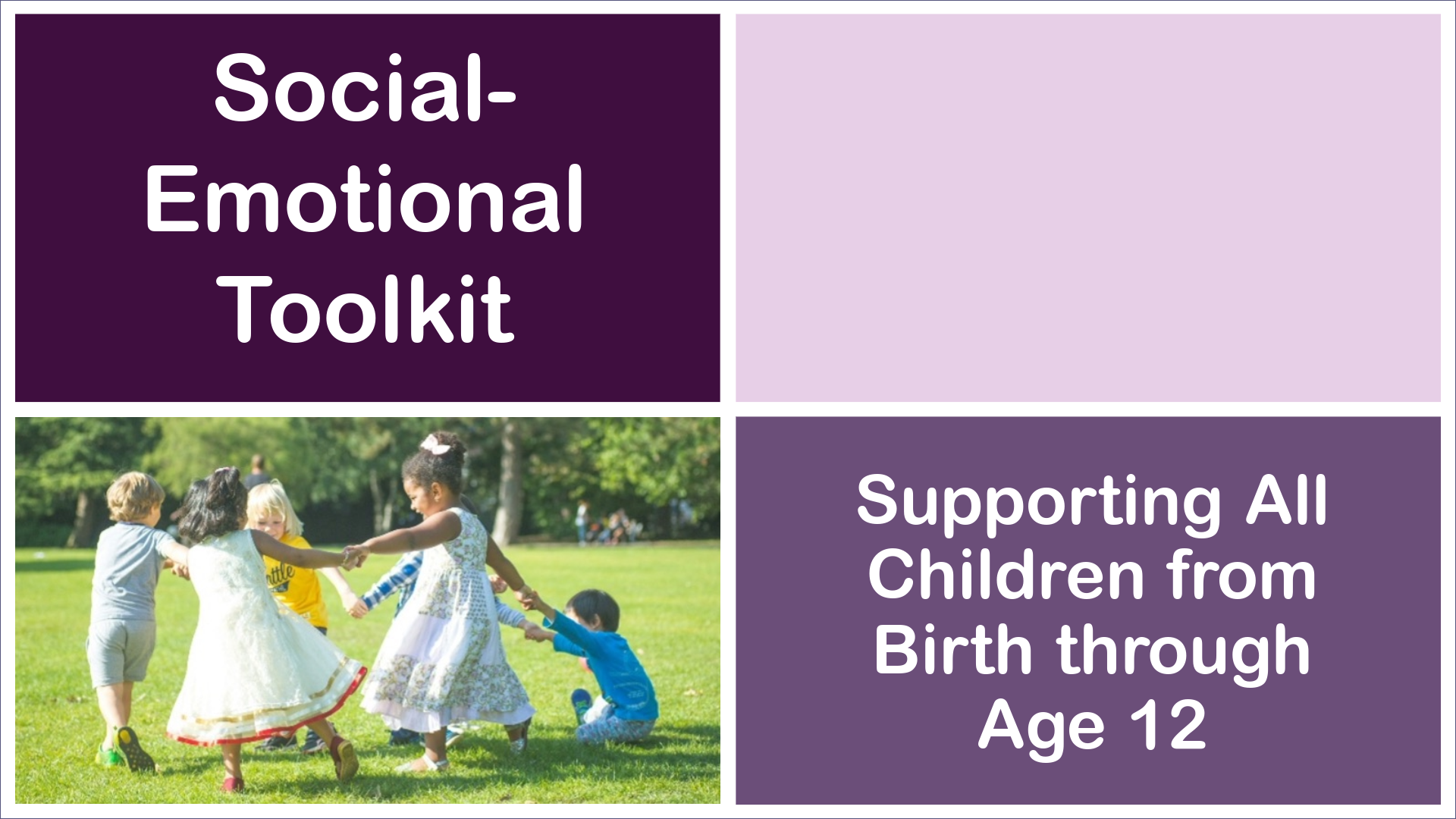
Welcome, California educators! In this issue of the MAP Newsletter we are excited to share a wonderful free resource from CDSS, the Social-Emotional Toolkit: Supporting All Children from Birth through Age 12.
Have you ever wished someone would hand you the right resource at just the right moment? Maybe it’s for the child who bites, the family meeting you feel nervous about, or the week you are simply worn out. This toolkit was made for moments like those. It was also built to fit into a real educator’s day, even if you only have 15 minutes.
Start Your Adventure: Social-Emotional Toolkit
Remember choose your own adventure books? You would read a page, make a choice, and the story took you exactly where you wanted to go. This toolkit works the same way.
Instead of handing you one long list of resources, the toolkit asks you a few simple questions about your situation. Your answers guide you along a path, which is a short series of questions that ends with a set of resources chosen just for you. Every path leads somewhere useful, and there are no wrong turns.
Find links to view a brief video tutorial and download the CA MAP Social-Emotional Toolkit resource page.
Pick Your Path
The Educator Path lets you explore five everyday topics:
- Understanding and Responding to Behavior
- Engaging and Partnering with Families
- Professional Development & Reflective Practice
- Classroom Team Practices: Communication & Collaboration
- Self-Care and Managing Stress
The Director & Leader Path offers resources for the people guiding programs, from supporting staff to shaping policies that keep children learning and included.
Two Ways to Explore. You Choose!
Each path is a short online form (a Microsoft Form). Click a path link in the toolkit and it opens right in your web browser. There is nothing to download, and you do not need to sign in to start.
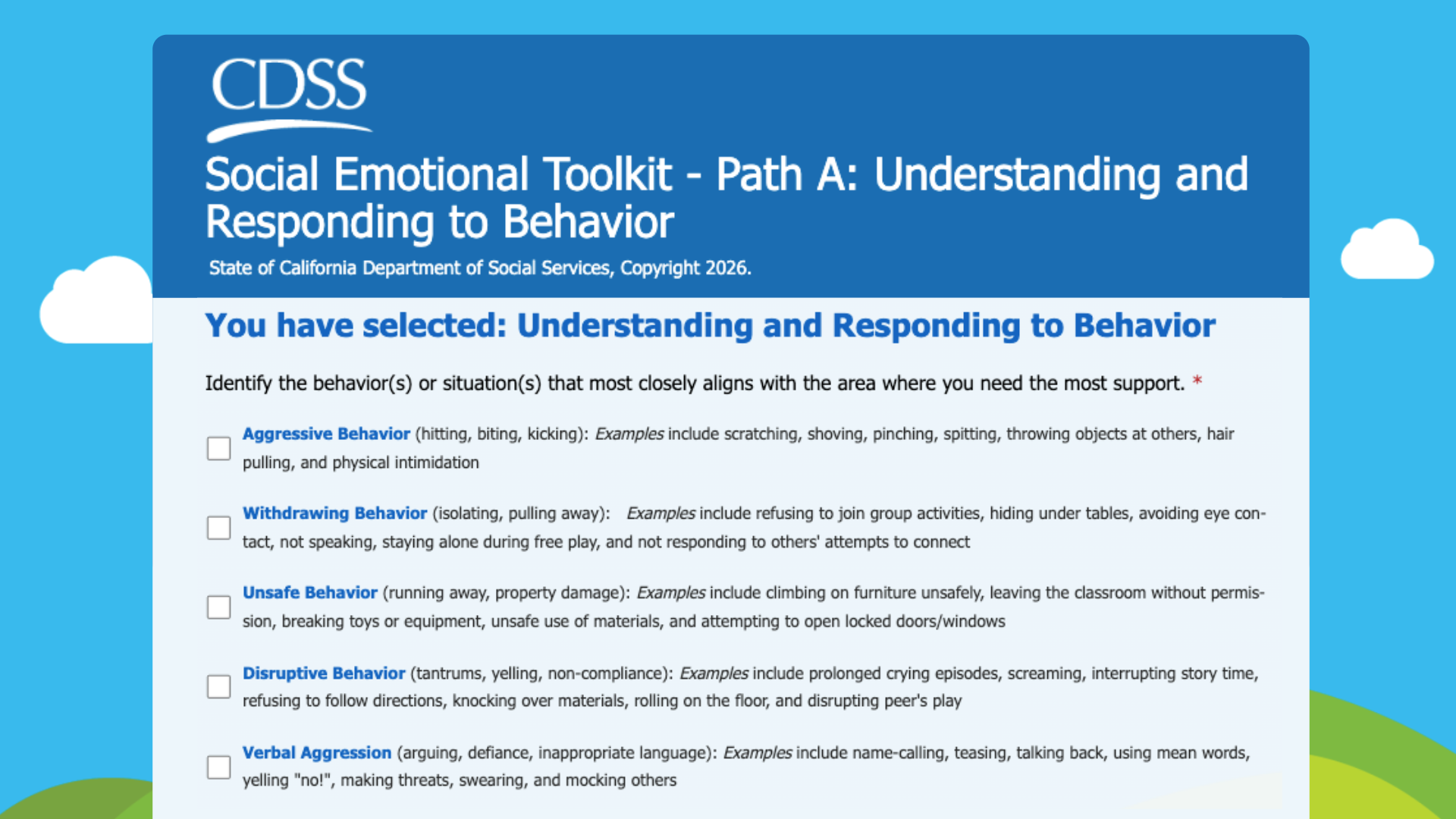
Option 1: Browse as you go. Move through the questions and click any resource that catches your eye. Each one opens in a new tab, so you never lose your place. Stop whenever you like. You do not have to finish the form to walk away with something useful.
Option 2: Finish your path and save your list. Answer all the questions, then click Submit. You will see a button that says “Save my responses to edit.” Click it, and everything you chose, including all of your resources, appears in one place, ready to revisit or share with your team.
One thing to know: saving your list requires a free Microsoft account. If you use Microsoft tools at work or school, you probably already have one. If you would rather not create an account, Option 1 works great without one.
Short on Time? Skip to the Library
At the end of the toolkit you will find the Appendix Resource Library. It gathers every resource from every path in one place, grouped by the common situations that come up in daily care and learning settings. It is a practical reference you can return to whenever a new question (or a new banana incident) comes up.
So pour yourself a cup of coffee, pick your path, and see where it takes you. We would love to hear what you find.
Our Favorite Finds
Everyone on our team has a resource they return to again and again. Here are three of our favorites:
Things That Will Help Me Stay Calm – Infants
National Center for Pyramid Model Innovations (NCPMI)
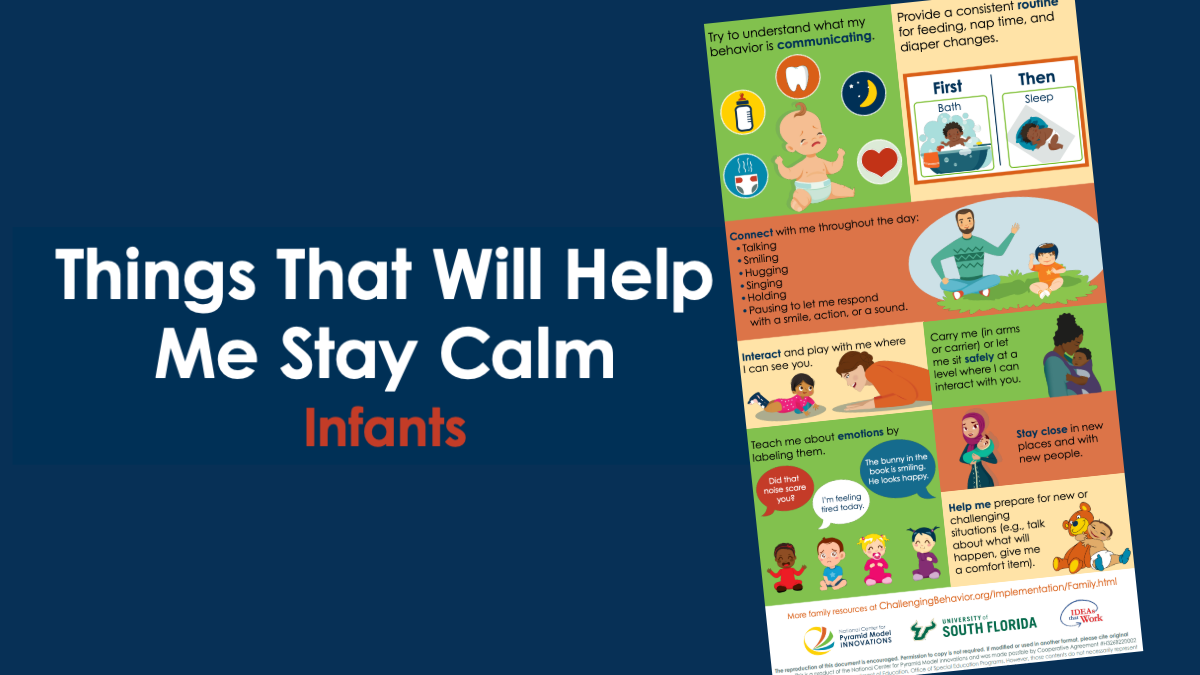
Working with a toddler, every day is full of “exciting” surprises, like learning exactly how loud a small person can be when their banana breaks in half. This one page infographic shows simple ways caregivers can bring calm and predictability to a little one’s day, with warm strategies any caregiver can start using right away.
Social Emotional Tips for Providers Caring for Toddlers (PDF)
Center for Early Childhood Mental Health Consultation
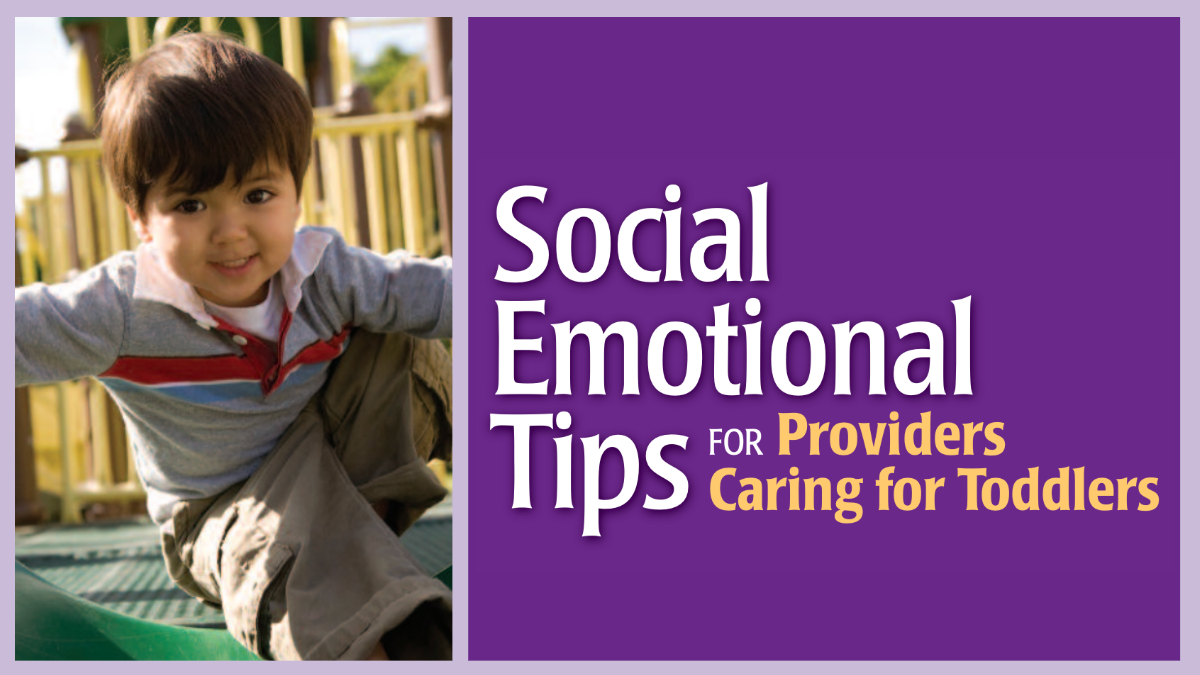
Toddlers are busy learning how to handle big emotions, and this resource is packed with practical tips for supporting them through everyday routines like arrivals, meals, play, and rest. It offers many different ways to meet toddlers where they are.
California Early Learning and Development
California Department of Social Services
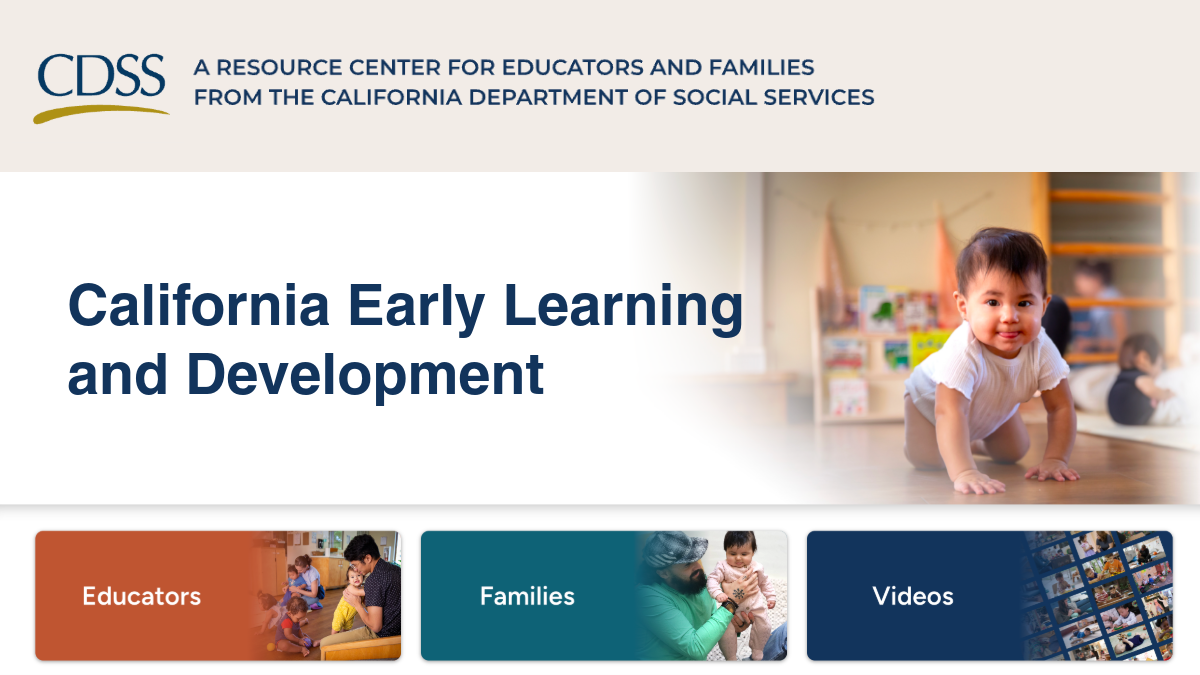
Tucked inside the toolkit is a link to this resource center for educators, families, and caregivers. It gathers trusted, research backed materials all in one place, and everything is available in English, Spanish, Simplified Chinese, and Traditional Chinese. It is worth a bookmark.
New This Season
A few other updates this season.
California Guidelines for Child Care in Home Settings
California Department of Social Services
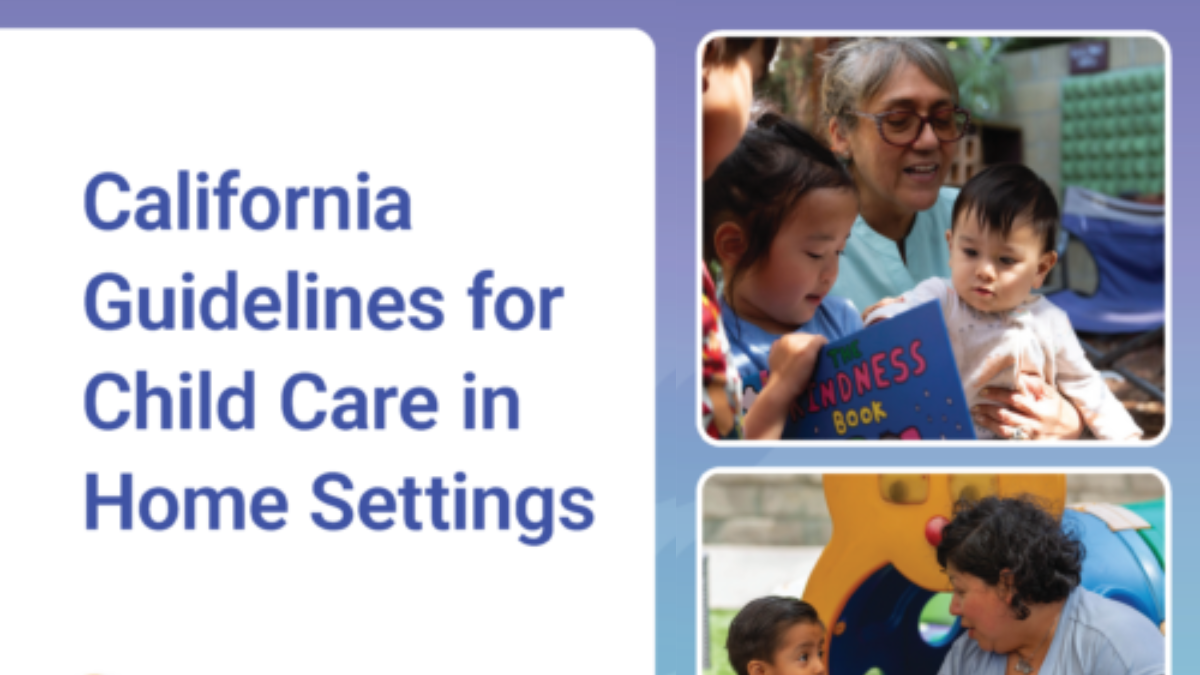
This publication is built specifically for the family child care homes and family, friend, and neighbor caregivers who make up one of the most common forms of child care in California. It treats running a family child care home as the small business it is, covering mission statements, contracts, financial policies, and record keeping, alongside guidance on health and safety, inclusive practices, and supporting children across mixed ages from infancy through school age. Each guideline area closes with a curated list of ready to use tools, from sample contracts to self-care supports.
California Preschool Guidelines for All Settings
California Department of Social Services
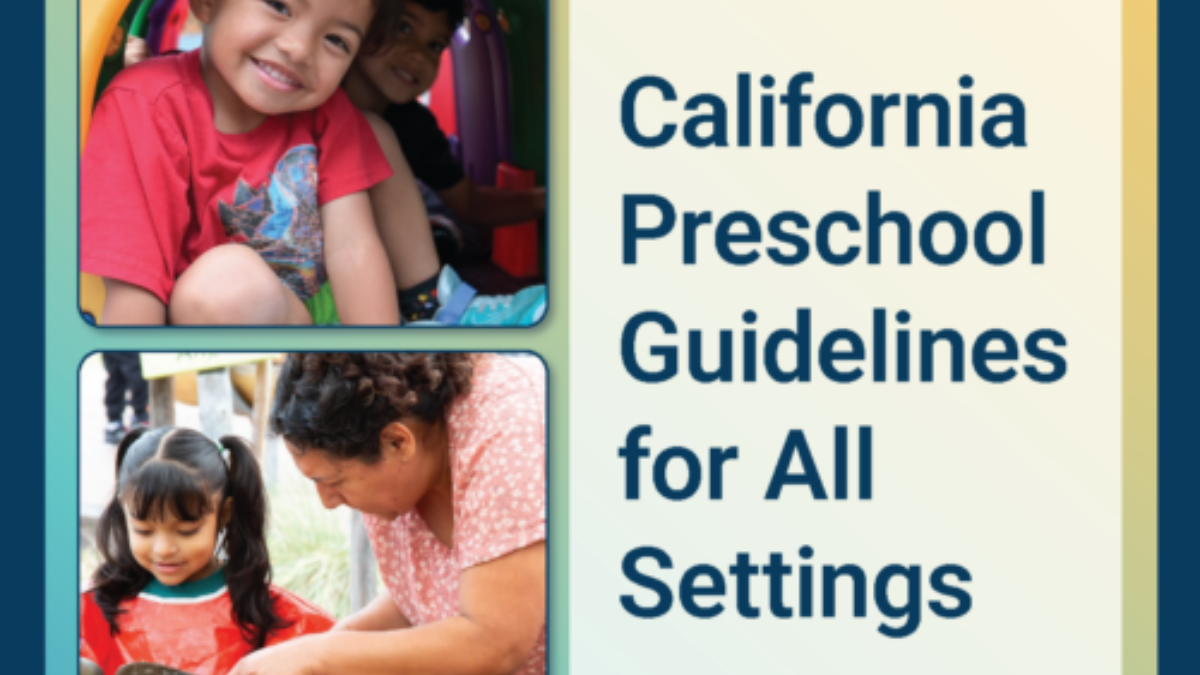
A full update to the 2015 Preschool Program Guidelines, this publication now covers every setting serving preschool age children, including family child care homes, school-based programs, and center-based classrooms. Ten guideline areas walk through what high quality looks like, from staff well-being and family partnerships to supporting children with disabilities and multilingual learners, each paired with real world examples. It is meant to be used alongside other resources in the California Early Learning and Development System, including the Preschool and Transitional Kindergarten Learning Foundations and the California Guidelines for Child Care in Home Settings.
Identifying and Supporting Dual Language Learners in Child Care
California Department of Social Services
Nearly 60 percent of young children in California grow up hearing a language other than English at home. To help providers recognize and support these children, CDSS created two short tools, the Family Language Instrument and the Family Language and Interest Interview, along with a Data Collection Handout that walks through how to use them, all available in fourteen languages. A linked professional development page also offers recorded webinars on identifying and supporting dual language learners.
2026 to 2027 Inclusion Webinar Series

Mark your calendar for November 3! Beginning Together is hosting a free virtual webinar, Inclusion Works! Part 2: Collaboration & Adaptation, from 5 to 7 p.m. It is offered in English and Spanish and is part of a full series on inclusion running through the 2026 to 2027 school year.
This activity is administered by WestEd and is sponsored by the California Department of Social Services, Child Care and Development Division.